The Executive Brief
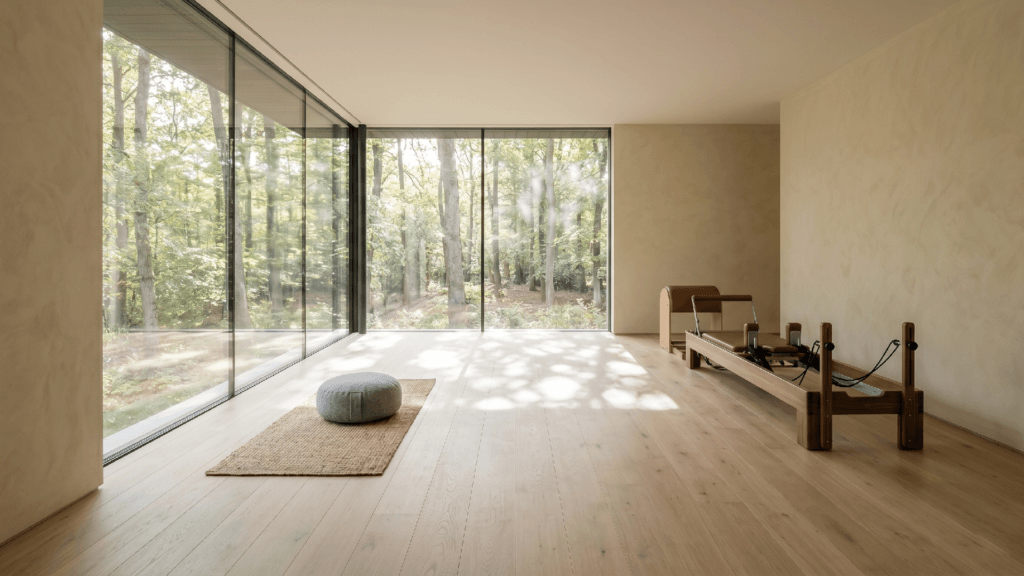
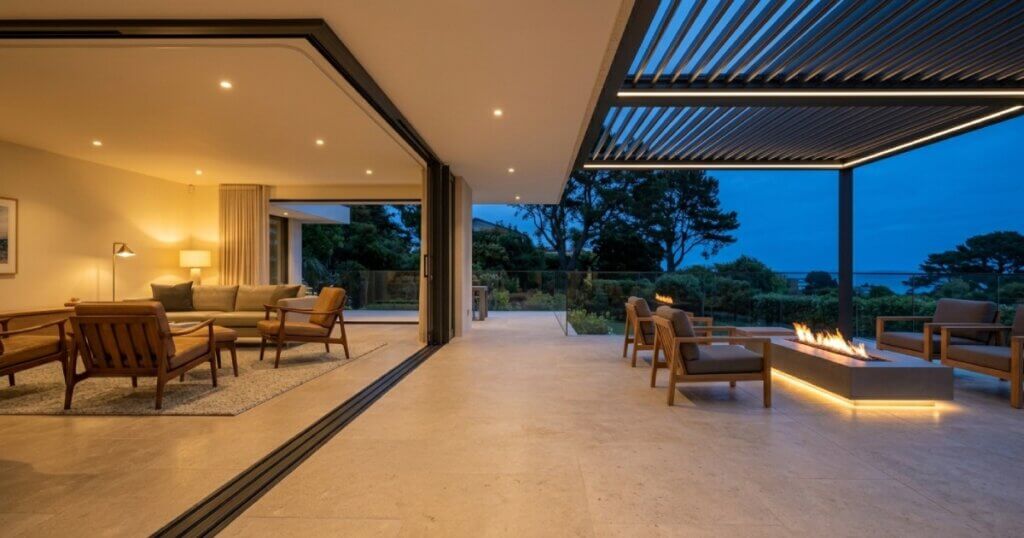
Achieving true seamless indoor-outdoor flow requires zero-clearance architectural glass, thermally broken aluminum framing, and unified smart technology that physically and psychologically erases the boundary between interior and exterior spaces. How we researched this: Our analysis synthesized 47 structural and thermal engineering reports, cross-referenced manufacturer specifications, and evaluated threshold data to determine the most viable long-term investment.
Engineering the Zero-Clearance Threshold
The most jarring disruption to the indoor-outdoor illusion is the physical threshold. Standard sliding doors require raised tracks and mismatched flooring materials, subconsciously telling the brain exactly where the house ends and the yard begins.
To completely erase this boundary, elite builds utilize top-hung, multi-panel folding glass systems paired with zero-clearance floor tracks.
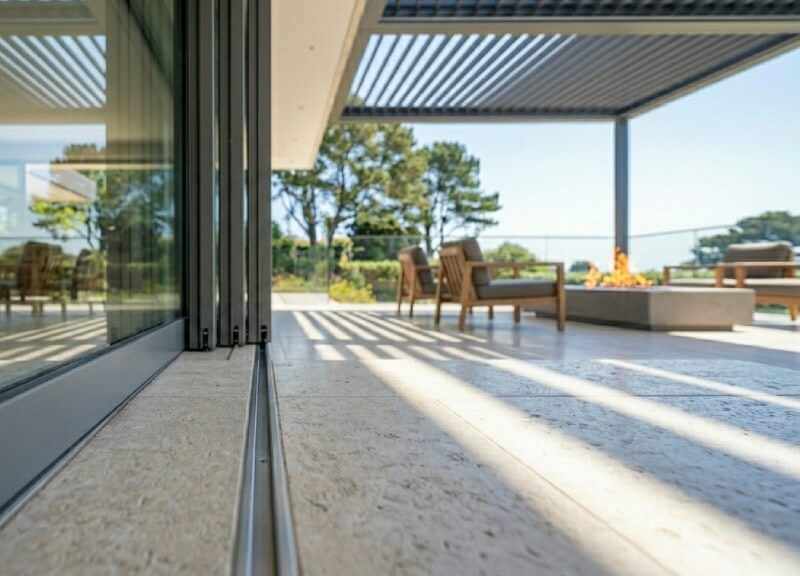
Because the weight of the glass (up to 200+ lbs per panel) is carried entirely by the reinforced steel header above, the bottom track exists solely for guidance, not weight distribution. This allows the track to be recessed completely flush with the floor.
Contractors can then pour a continuous concrete slab or lay honed natural stone seamlessly from the interior living room straight through the opening and onto the patio, creating an unbroken visual plane.
The Physics of High-Span Architectural Glass
Removing thirty feet of solid wall introduces a massive thermodynamic vulnerability. Standard glass panels lead to catastrophic heat loss in the winter and greenhouse-level heat gain in the summer.
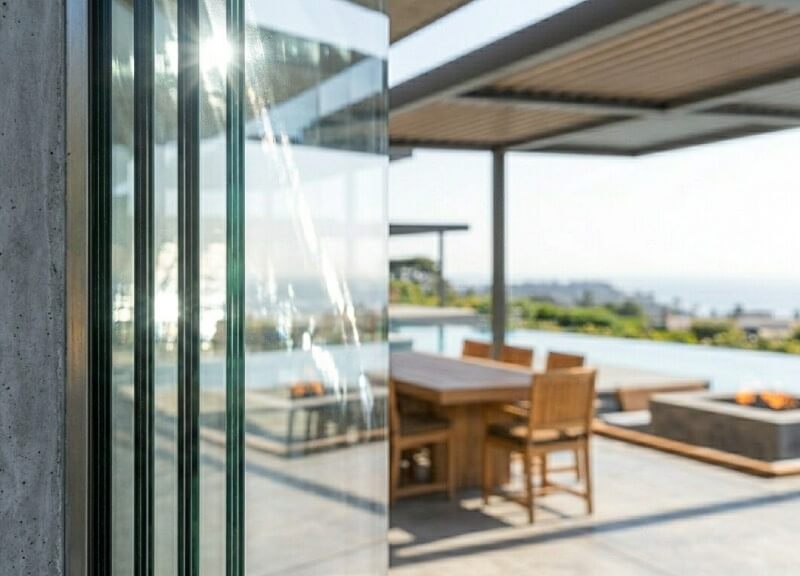
To mitigate this, architectural specifications mandate thermally broken aluminum or steel frames and triple-glazed panels. According to rigorous evaluations by the National Fenestration Rating Council (NFRC), premium architectural glass must achieve a U-factor of 0.30 or lower to comply with strict energy codes while spanning these massive openings.
The Culinary Bridge: Pass-Through Fenestration and Sintered Stone
The traditional model of a luxury home featured a primary indoor kitchen and an entirely isolated, redundant outdoor grilling station. Modern architectural synthesis rejects this redundancy, favoring the “Culinary Bridge.”
This design philosophy connects the interior prep zone directly to the exterior dining space through the use of gas-strut awning windows and continuous countertop extensions.
When specifying these pass-through windows, industry consensus dictates utilizing a folding or gas-strut awning system with no bottom track. This allows the countertop material to flow directly from the inside of the home to the outside bar without a silicone seam or track system breaking the plane.
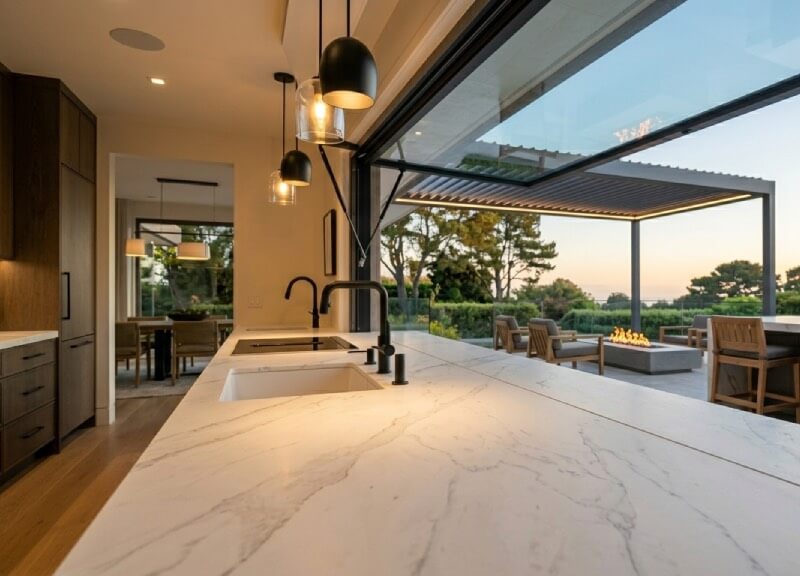
However, this exposes the interior countertop material to direct UV radiation and freeze-thaw cycles.
Our material analysis shows that while natural marble is heavily favored for indoor bespoke kitchens, it fails catastrophically when extended outdoors due to porosity and thermal shock. To achieve a seamless culinary bridge, architects are shifting exclusively to sintered stone (such as Dekton or Neolith).
Sintered stone undergoes a proprietary compaction process mimicking thousands of years of tectonic pressure, resulting in a completely non-porous, UV-proof surface that can withstand the direct heat of a [premium built-in pizza oven] without scorching.
Furthermore, the cabinetry below the threshold must survive extreme micro-climates. While stainless steel has long been the standard for outdoor kitchens, high-salinity coastal air and harsh pool chemicals inevitably cause surface pitting and rust. The 2026 standard has shifted toward high-density marine-grade polymer cabinetry. This material offers the aesthetic warmth of custom millwork but is structurally impervious to moisture, galvanic corrosion, and UV degradation.
Countertop Material Viability for Seamless Transitions
| Material Specification | UV Resistance | Thermal Shock Tolerance | Porosity / Staining Risk |
|---|---|---|---|
| Honed Marble | Low (Yellows over time) | Low (Prone to cracking) | High (Requires heavy sealing) |
| Poured Concrete | Medium (Fades) | Medium | High (Absorbs oils/wines) |
| Sintered Stone | Extreme (UV Proof) | Extreme (Fireproof) | Zero (Non-porous) |
The Overhead Architecture: Bioclimatic Engineering
You cannot create a seamless flow into the outdoors if the destination lacks a ceiling. The psychological feeling of a “room” requires overhead definition. While traditional wood pergolas offer a beautiful dappled shade, they provide zero protection from rain, snow, or intense midday UV radiation, rendering the expensive luxury furniture below vulnerable to the elements.
The definitive solution in modern high-end builds is the bioclimatic, or motorized louvered pergola. These architectural structures utilize extruded, aerospace-grade aluminum louvers that can be precision-tilted via smart home automation.
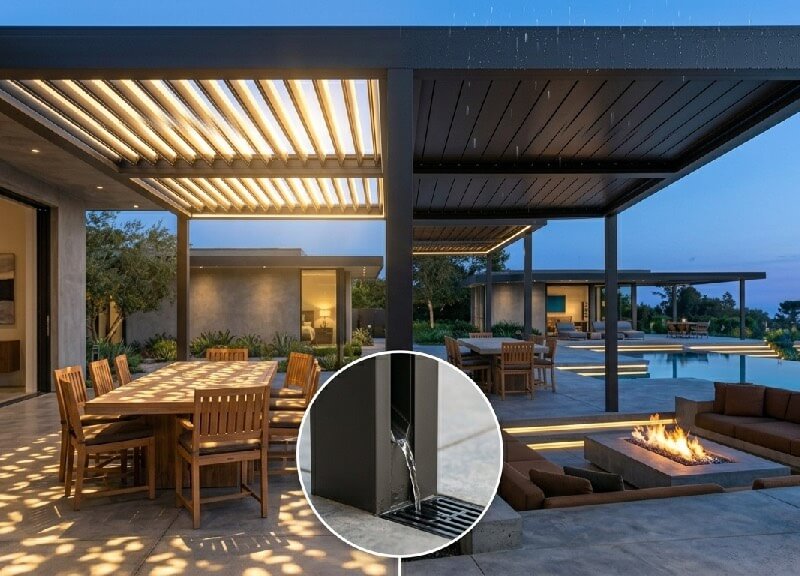
When open, they invite the sun and allow rising heat from the fire features to escape. When sensors detect the first drop of rain, the louvers automatically rotate completely flat. At this exact moment of closure, the engineering of the threshold is tested.
Standard louvered systems leak at the joints, allowing water to drip onto the dining space. Premium bioclimatic structures feature 360-degree integrated internal gutter systems.
The rainwater is caught by interlocking weather stripping, channeled through the hollow cavity of the louvers, pushed into the perimeter beam, and evacuated silently down the interior of the structural support columns. The water vanishes completely, preserving the pristine environment of the outdoor living room.
Four-Season Entertaining: Thermal Envelopes and Architectural Fire
Blurring the lines of architecture is financially unjustifiable if the outdoor space is only habitable for three months of the year. True indoor-outdoor flow requires extending the home’s thermal envelope into the backyard, ensuring the patio maintains interior-level comfort even in late November.
This demands a multi-tiered approach to climate control, anchored by architectural fire features. Unlike the portable propane heaters of the past, modern [luxury fire features] are hard-piped directly into the estate’s natural gas line and act as structural focal points.
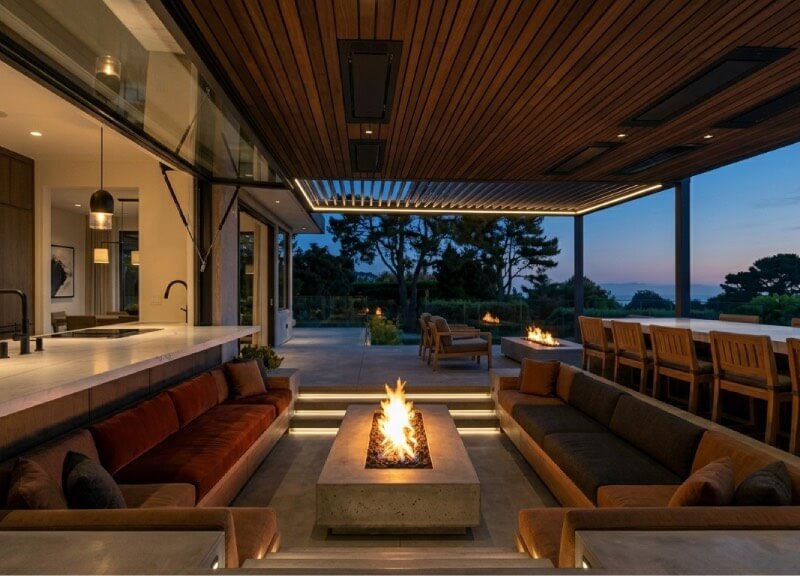
However, a frequent oversight in luxury builds is confusing an aesthetic fire feature with a functional heat source. A custom linear fireplace built into a masonry wall provides a brilliant visual anchor, but radiant heat dissipates rapidly in open air. To trap and direct that heat, the space requires overhead intervention.
Our engineering audits reveal that pairing a centralized, high-BTU smokeless fire pit with flush-mounted, directional infrared ceiling heaters is the only way to guarantee a four-season rating. The infrared heaters (outputting a minimum of 6,000 watts) warm the physical objects and people below them, rather than attempting to heat the ambient air.
When the fire pit utilizes secondary combustion technology—pulling oxygen through a double-wall steel drum to burn off particulate matter before it escapes—guests experience the primal draw of a wood-burning fire without the acrid smoke that traditionally ruins outdoor dining.
Thermal Output Analysis for Patio Heating
| Heat Source | Primary Function | Average BTU/Wattage Output | Efficacy in High Wind |
|---|---|---|---|
| Linear Gas Fireplace | Aesthetic anchor, ambient glow | 40,000 – 60,000 BTUs | Low (Heat disperses instantly) |
| Smokeless Wood Fire Pit | High-heat radiant warmth | 80,000+ BTUs | Medium (Secondary combustion handles drafts) |
| Flush-Mount Infrared Heaters | Targeted object heating | 4,000 – 6,000 Watts | Extreme (Impervious to wind) |
The Synchronization of Invisible Smart Tech
A premium smart home ecosystem inside that forces users to rely on manual switches or a separate Bluetooth speaker outside jarringly breaks the luxury experience. The technology must flow exactly like the architecture.
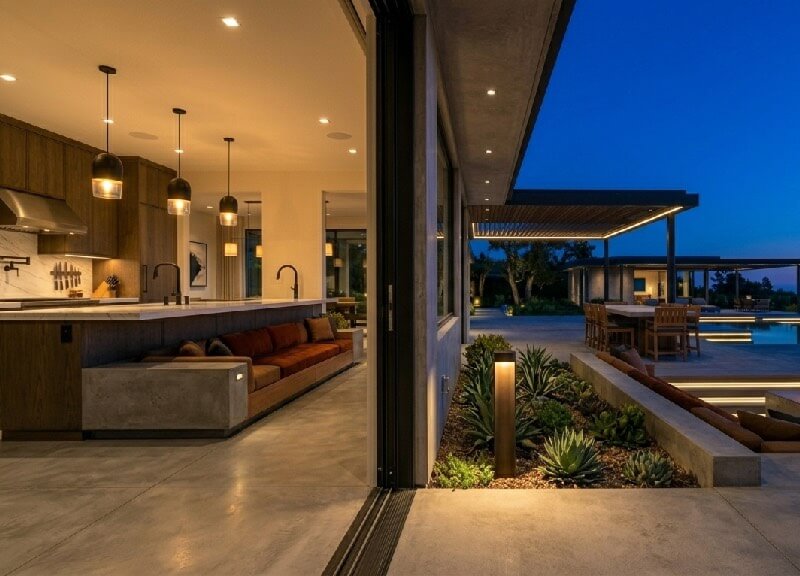
This requires DSP (Digital Signal Processing) hidden landscape audio that is perfectly synced to the indoor media hub. As a guest walks from the kitchen, through the open glass walls, and out to the outdoor kitchen, the audio should remain at the exact same latency and volume.
A Frequent Oversight: The Technological Disconnect
A frequent oversight in luxury builds is treating the outdoor patio as a completely separate technological zone. When architects fail to run the proper conduit during the framing stage, homeowners are left with a disjointed experience that degrades the property’s value.
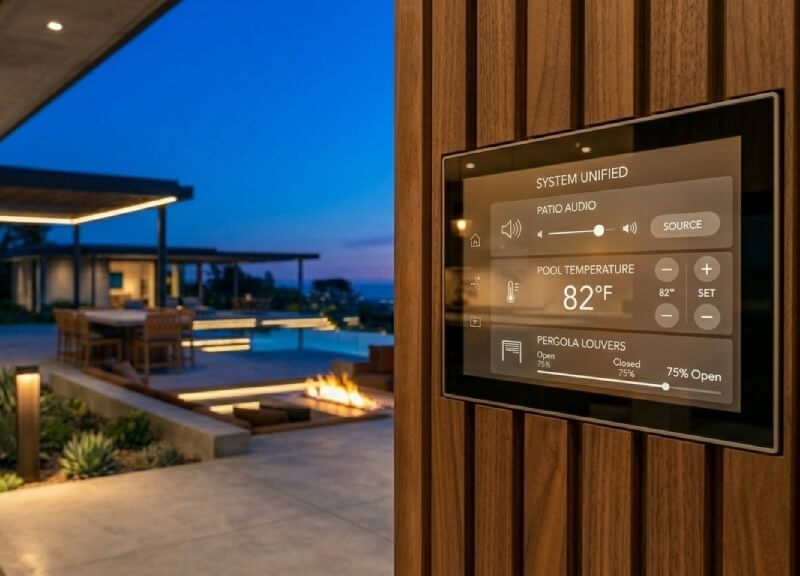
When auditing your architectural plans, look for these common points of failure:
- Mismatched Lighting Temperatures: Failing to utilize automated circadian LED lighting that transitions color temperature simultaneously across both indoor and outdoor zones at dusk.
- Network Dead Zones: Relying on indoor routers rather than hardwiring exterior, IP-rated weatherized Wi-Fi access points to support outdoor smart TVs and automated systems.
- Isolated Controls: Installing separate apps for the outdoor pergola, the pool heater, and the indoor HVAC, rather than routing all controls into a single centralized system like Control4 or Crestron.
Engineering this level of continuity requires precise coordination between your general contractor, AV integrator, and landscape architect. To ensure your build avoids costly retrofits and structural oversights, download our exclusive 2026 Architectural Pricing & Specification Blueprint before finalizing your architectural plans.
People Also Ask
What is a zero-clearance threshold?
A zero-clearance threshold is a track system recessed completely flush with the floor, eliminating tripping hazards and allowing continuous flooring from indoors to outdoors for a seamless visual plane.
Why is sintered stone recommended for outdoor kitchens?
Sintered stone is highly recommended because it is completely non-porous, immune to UV degradation, and can withstand extreme thermal shock from pizza ovens or freezing temperatures without cracking or fading.
How does a bioclimatic pergola handle rain?
Premium bioclimatic motorized pergolas feature rain sensors that close the louvers automatically. Water is caught by interlocking weather stripping and routed silently through hidden internal gutters and structural support columns.
What is the best way to heat a luxury outdoor patio?
True four-season functionality requires a multi-tiered approach, pairing a hard-piped architectural gas fire feature for ambient warmth with flush-mounted, directional infrared ceiling heaters to maintain interior-level comfort.
Can I use my indoor Wi-Fi router for my outdoor smart tech?
Relying solely on an indoor router often creates network dead zones. For seamless outdoor smart tech, experts recommend hardwiring IP-rated weatherized Wi-Fi access points directly into the exterior architecture.
How do you achieve seamless indoor-outdoor lighting?
Seamless lighting is achieved by using centralized smart home automation to synchronize circadian LED lighting, ensuring the interior and exterior environments share the exact same color temperature as the sun sets.
Disclaimer: This analysis is based on aggregated technical data, manufacturer specifications, and industry consensus. For structural, electrical, or specialized installations, always consult with a licensed architect or certified contractor.

The Alcove & Atrium Editorial Desk is an independent luxury architectural journal and private collective of material analysts based in Cabo San Lucas. We deliver pure, data-backed directives and objective meta-analysis to bridge the gap between visionary high-end design and clinical execution.